

Quick & Easy Butterflied Roast Chicken Recipe (how-to)
There is nothing quite like a simple roast chicken for an easy, satisfying dinner. This spatchcock roast chicken is my favorite way to cook a whole chicken because removing the backbone allows the bird to lie flat, which means the whole chicken cooks more evenly and in less time. The result is juicy chicken, tender meat and wonderfully crispy skin—and it is surprisingly easy to do once you know how. If you’ve never butterflied a chicken before, don’t be intimidated! With a good pair of kitchen shears or a sharp knife, you can have a butterflied chicken ready for the oven in just a few minutes. This is one of those chicken recipes that works beautifully for a weeknight dinner, Sunday supper or anytime you want a perfect meal without a lot of fuss.
Why I love this
If you happen to be the type that gets the heebie jeebies from bone crunching, spine slicing, or joint snapping you might want to zip to the bottom of this post, or skip this post. NO! no, no! No post skipping just toughen up while I show you how to butcher a bird. Deep breath you can do it! Roast chicken is super adaptable and one of the easiest ways to get dinner on the table. There is nothing more delicious or versatile.
Roast Chicken can be a one pan dinner; by tossing potatoes, carrots, or any root vegetable around the chicken while it’s baking. If you really want to get inventive lay the chicken on top of lemon slices and fresh thyme. sprinkle with olive oil, salt and pepper. While the chicken is roasting you can be throwing together a salad pouring yourself a glass of wine. See what I’m saying? It’s a no fuss no muss dinner….well spine removal, if you call muss, but honestly this is an easy meal!
The leftovers from the chicken can be used to make soup, chicken salad or a casserole for later in the week, but if your family is like mine you might need to roast two chickens if you want any leftovers. I’ve included links below to some satisfying ways to use up leftover roast chicken.
So here is how I cut up my cheeckin’…..remember this is not for the faint of heart. You’ve been warned. Buyer beware…or something of that nature.
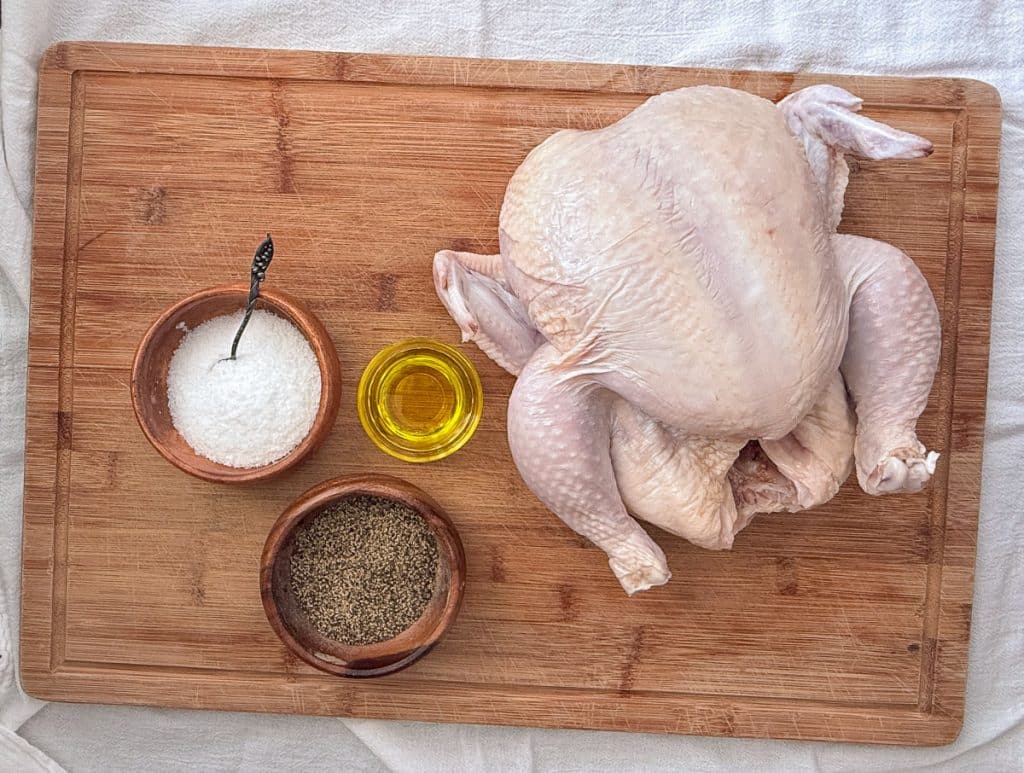
Gather these ingredients
Step-by-Step: How to Spatchcock a Chicken
These step-by-step instructions will show you the easiest way to prepare a butterflied chicken for roasting. If you prefer to watch rather than read, be sure to check out my step-by-step video showing you exactly how I do it.
A preheated oven is important for getting that beautiful crispy skin while keeping the chicken juicy.
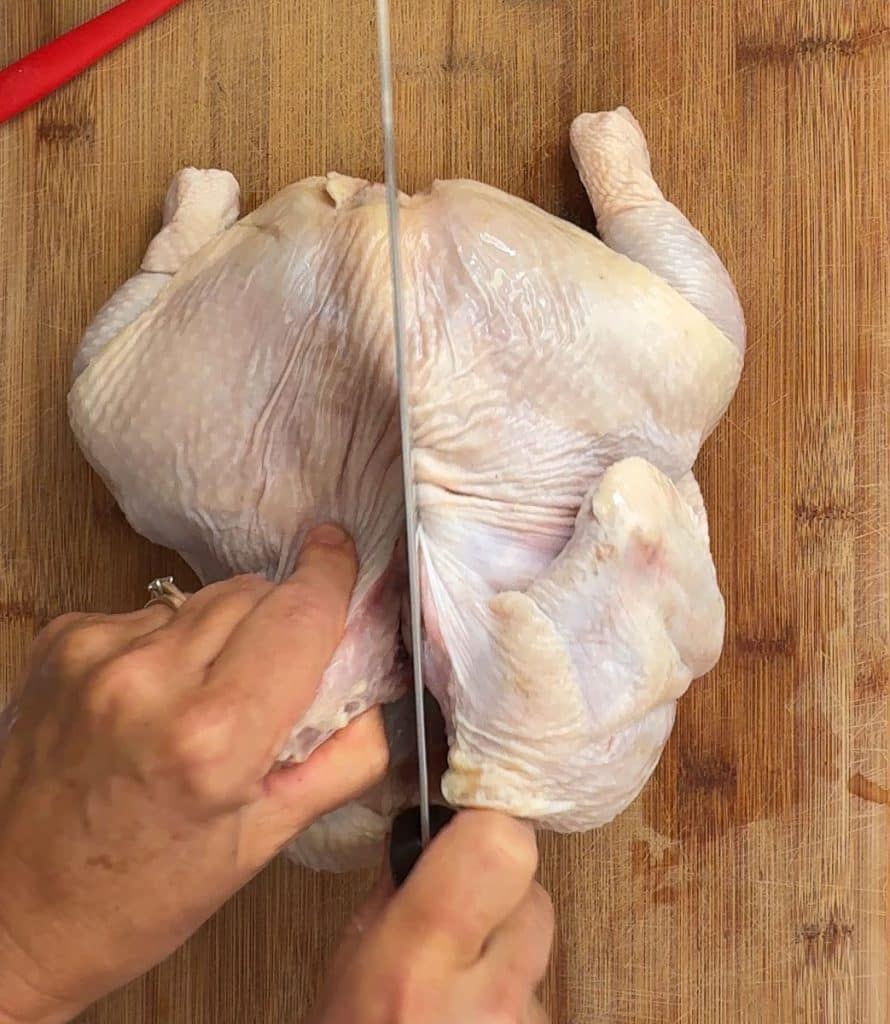
Place the whole chicken breast-side down on a sturdy cutting board with the neck end closest to you. Pat the chicken dry with paper towels. Locate the neck and place the palm of your hand firmly on the bird’s backbone just south of the neck. Press down firmly until you hear a CRACK!—I like to call this a little bit of poultry chiropractics. This loosens the ribs from the spine, making the backbone much easier to remove.
Using a good pair of poultry shears or a sharp knife, cut along one side of the backbone, starting at the neck and working toward the tail. Turn the chicken around and cut along the other side of the backbone. Remove the backbone and save it for making homemade stock if you’d like.
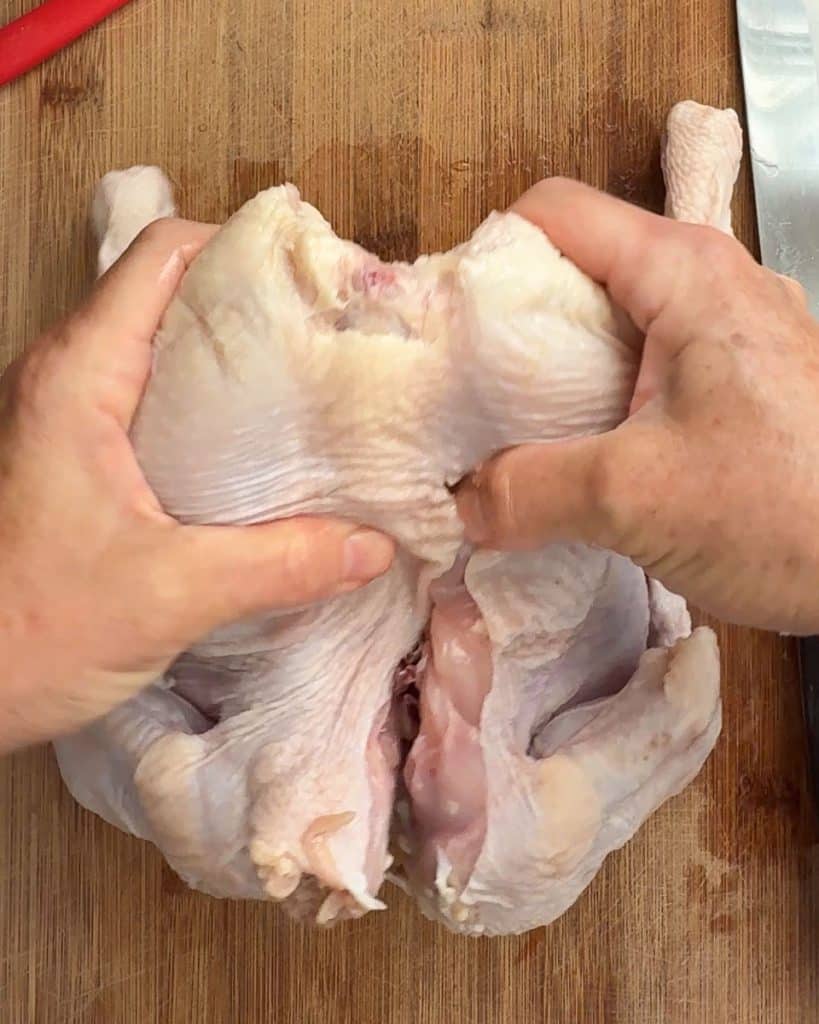
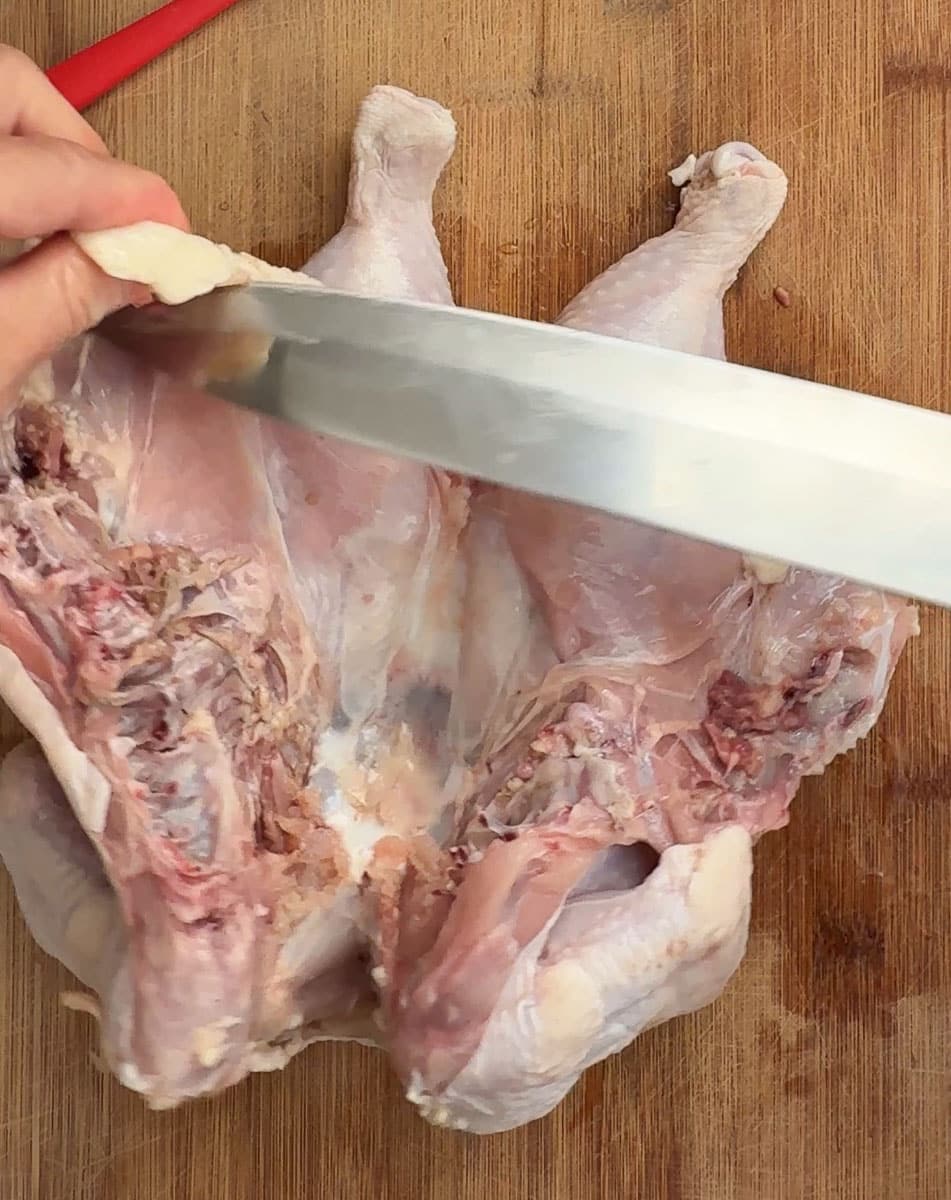
Take hold of the neck and, using a very sharp knife, carefully cut along one side of the backbone. Open the chicken up and turn it chicken skin side up. Press firmly on the breastbone with the palm of your hand until you hear a crack and the chicken lies flat. You now have a butterflied chicken, also called a spatchcock chicken! At this point, take a moment to trim away any remaining bits of fat, veins, or other unwanted pieces from the inside of the chicken. A quick cleanup now will give you a nice, neat bird that’s ready to season and roast.
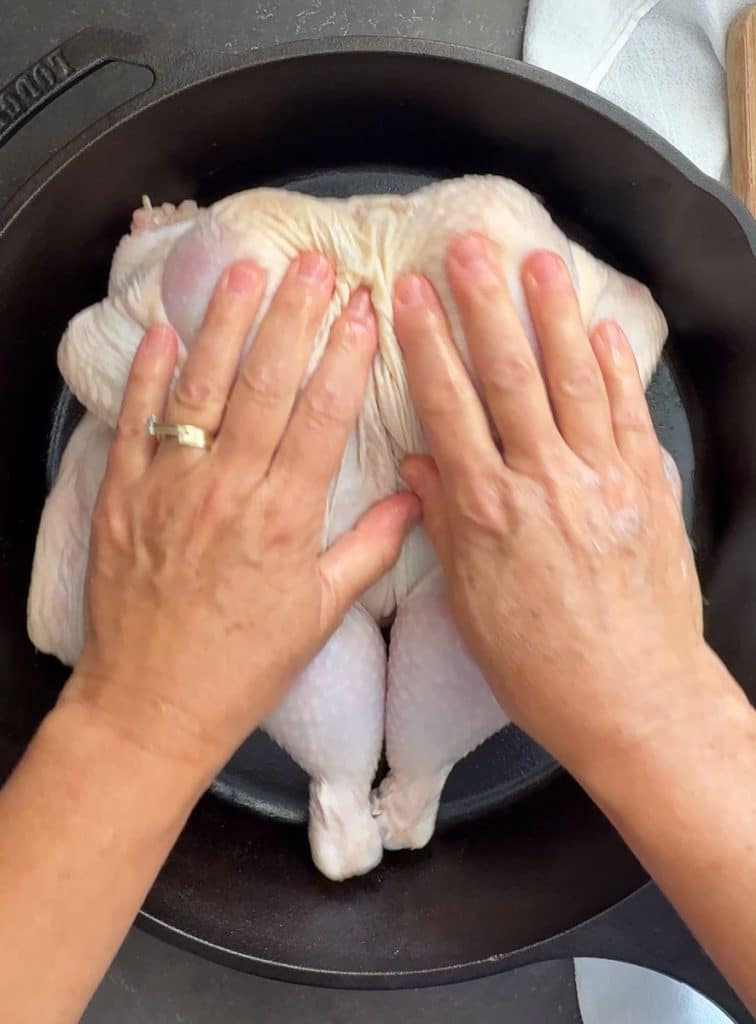
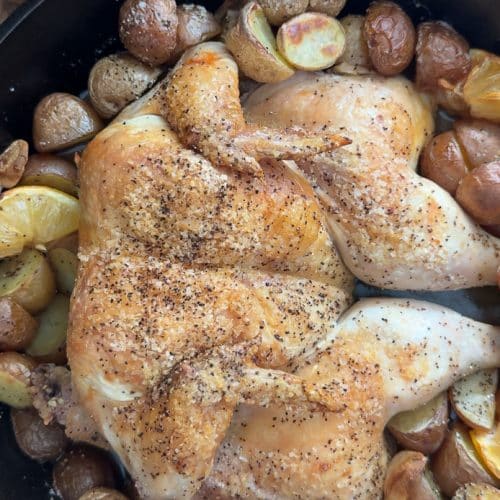
Place butterflied chicken insides down into a cast iron skillet or on to a baking sheet. Press into the chicken to flatten it out as much as possible. You can butcher this up a bit more to really get her low and stretched out, but one cut is enough, no need to complicate things.
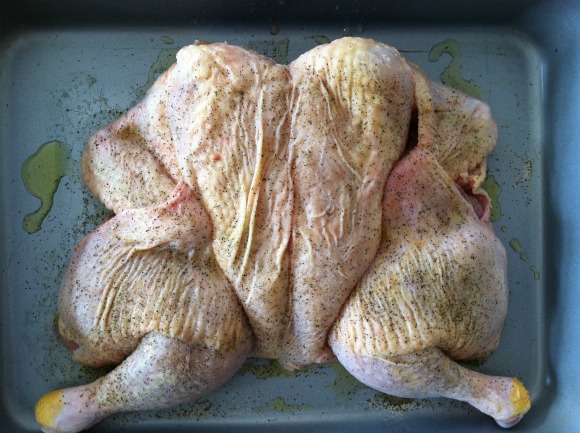
The chicken in the above photo I broke the hip bones away to flatten the bird about a bit more and placed her in a baking pan. Then I tucked her wings in her pockets, because they were cold.
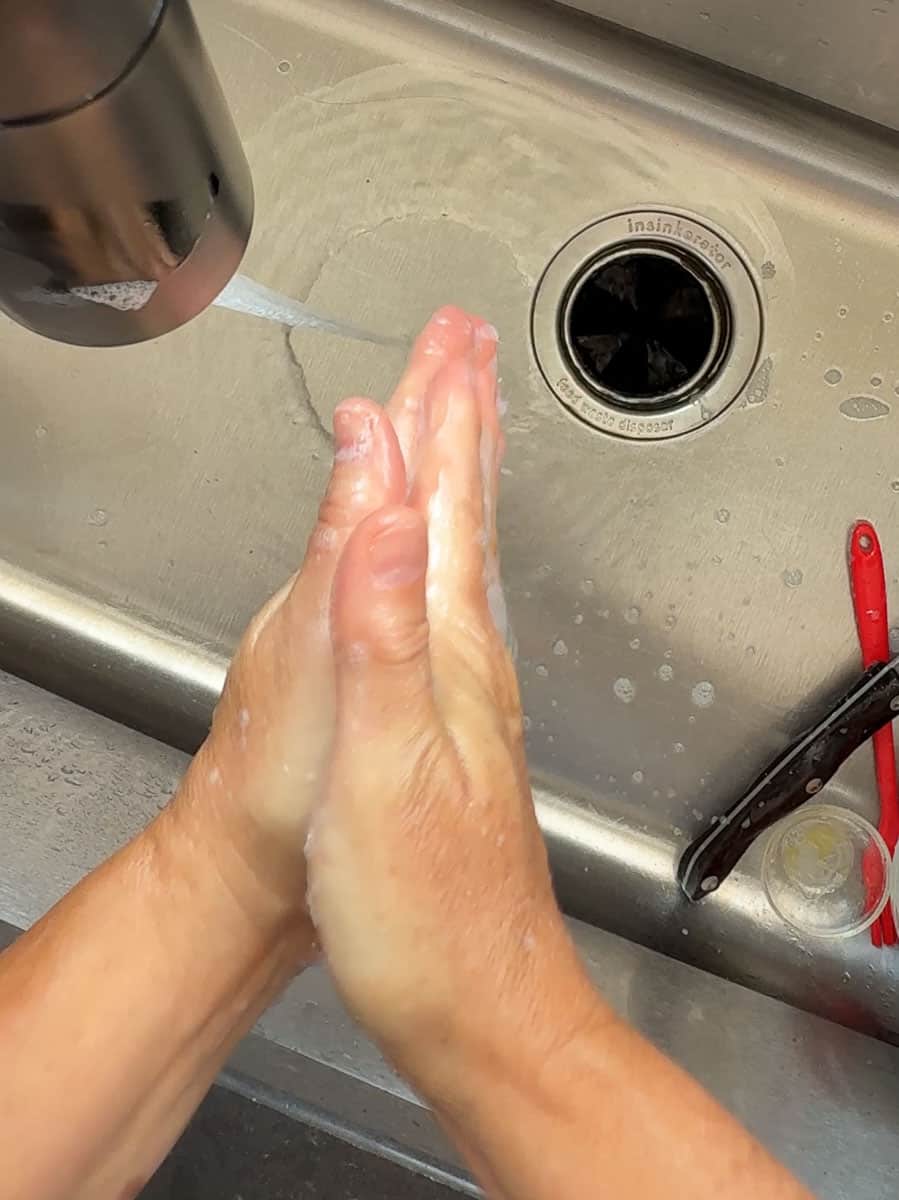
TIP: You do not need to wash your chicken—just wash your hands! In fact, rinsing raw chicken under running water can cause contaminated droplets to splash onto your sink, countertops, and surrounding surfaces. Instead, pat the chicken dry with paper towels and thoroughly wash your hands with soap and water after handling the raw chicken. I also like to keep disinfecting wipes under my sink so I can quickly wipe down the sink and surrounding area after working with raw meat. It gives me peace of mind knowing my workspace is clean and ready for the next step.
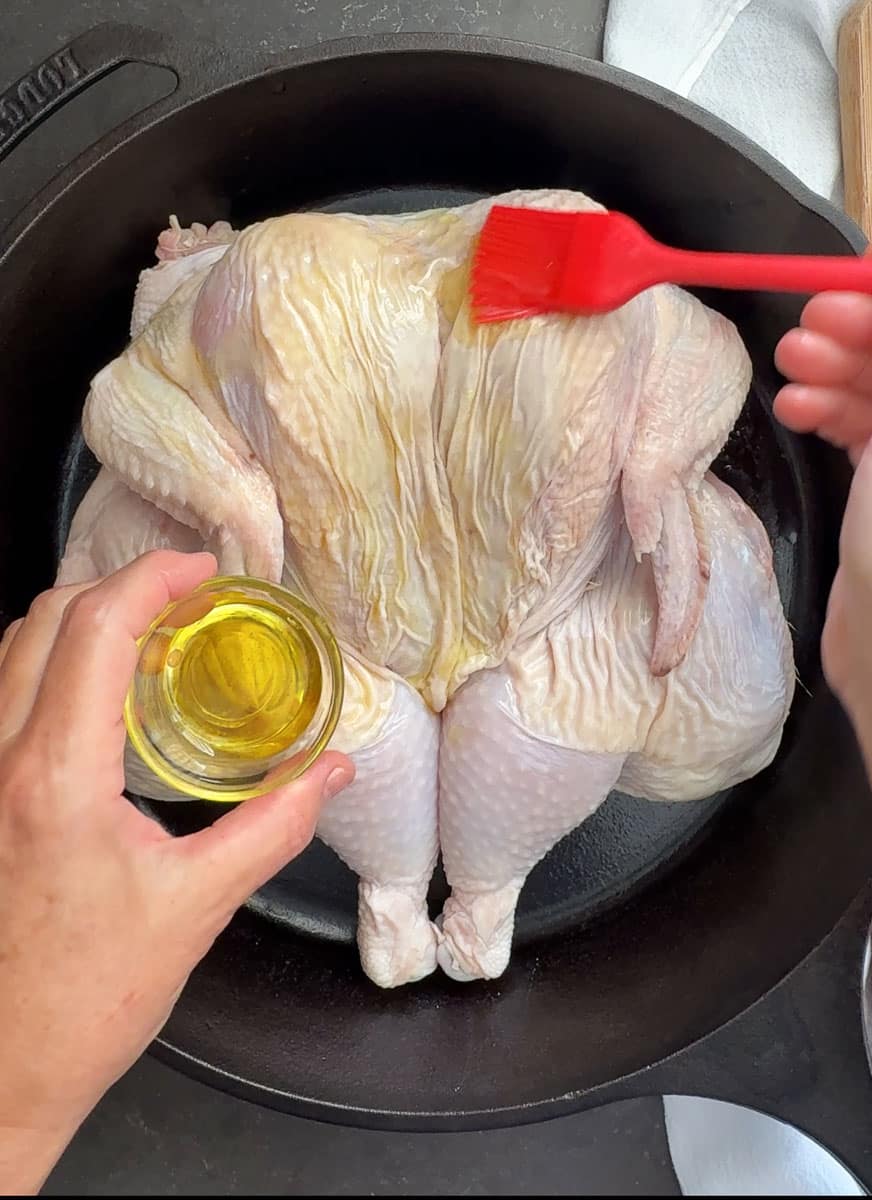
Baste chicken generously with olive oil and season even more generously with salt and black pepper. You want the chicken skin well seasoned so it roasts up golden and crisp. You can even season the underside if you want, but you’ve already washed your hands so never mind.
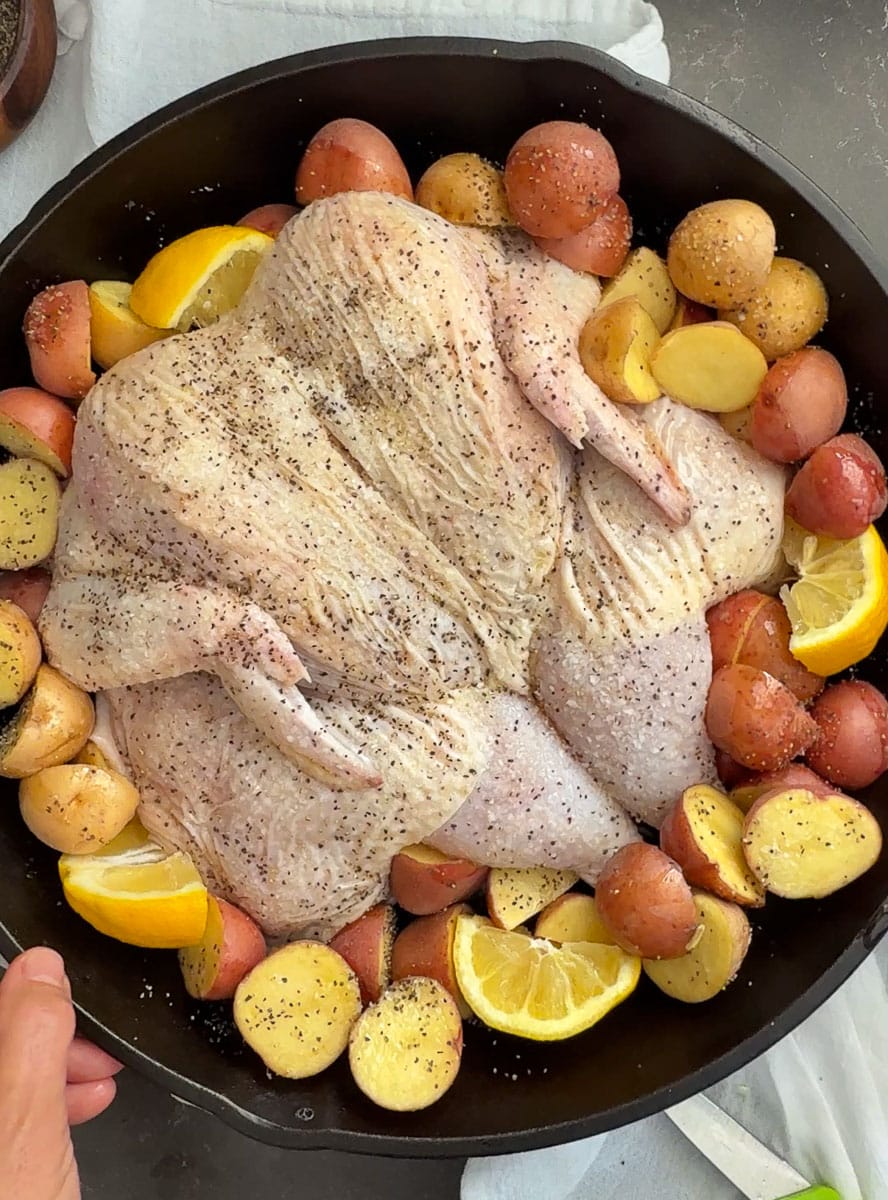
Place the chicken in a preheated 400°F oven and roast for about 45 minutes for a 4-pound chicken. Keep in mind that cooking time will vary depending on the size of your chicken, so don’t rely on time alone. For the juiciest chicken, use a meat thermometer to check the internal temperature in the thickest part of the thigh or breast. The chicken is done when it reaches 165°F.
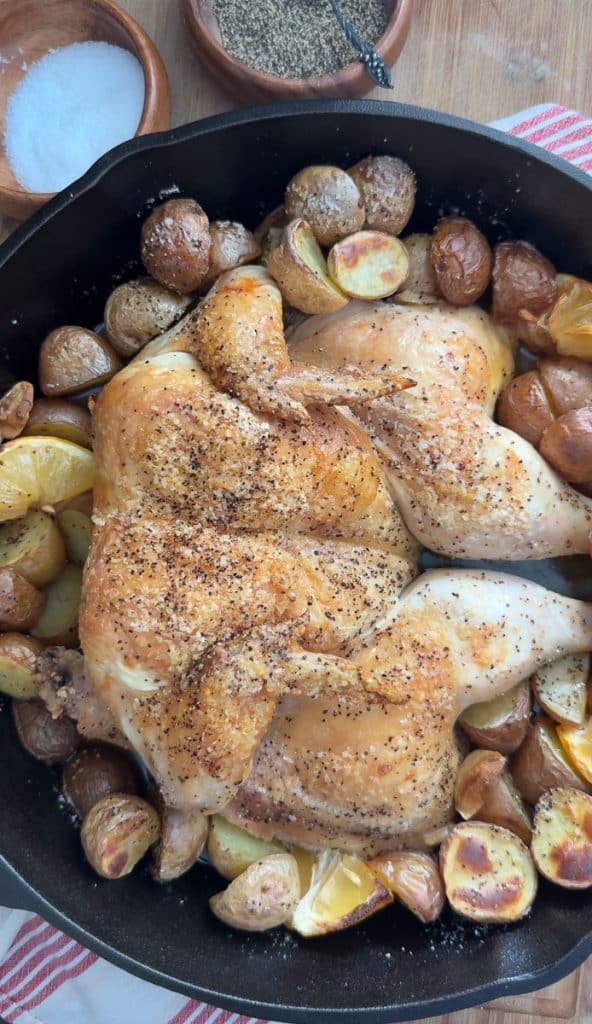
TIP: As you can see I surrounded my chicken with small red potatoes, lemon wedges, a few cloves of garlic. You could also tuck some thyme or rosemary in there too. Add some green beans, or broccoli. The sky is the limit!
Variations + ways to change things up!
Garlic and Herb Roast Chicken
For a flavorful twist, tuck a few garlic cloves and sprigs of fresh rosemary underneath and around the chicken before roasting. You can also add other fresh herbs such as thyme or parsley. The herbs perfume the chicken as it roasts and add wonderful flavor without making the recipe complicated.
Lemon Herb Chicken
For a bright, fresh version, place slices of lemon underneath the chicken or squeeze half of the lemon over the chicken before roasting. Add fresh rosemary and thyme for a classic lemon-herb combination.
Cast Iron Roast Chicken
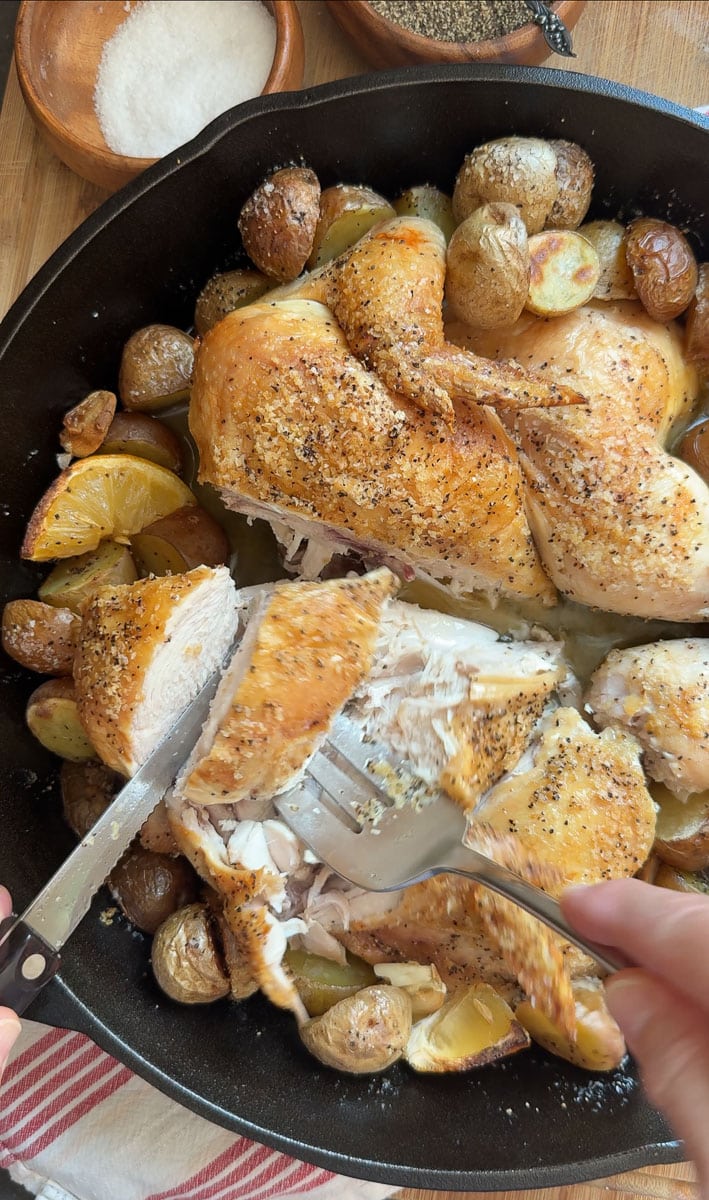
A cast iron pan works beautifully for spatchcock chicken. It holds heat well and gives you beautifully browned, crispy skin. You can even scatter potatoes or other vegetables around the chicken to make it a simple one-pan meal.
Roast Chicken with Vegetables
For an easy weeknight dinner, arrange potatoes, carrots, onions or other root vegetables around the butterflied chicken. The vegetables roast in all those delicious chicken juices while the chicken cooks.
Make It a Meal-Prep Chicken
Roast a larger pound chicken or even two chickens if you want plenty of leftovers. Once cooled, remove the meat from the bones and store the leftover chicken in an airtight container. Use it throughout the week for salads, soups, sandwiches, casseroles and quick dinners.
Now if that isn’t finger licken good I don’t know what is!
Why roast your own chicken?
With rotisserie chickens so inexpensive and convenient at the grocery store, you might be wondering, “Why would I ever roast my own chicken?” I get it! But there are a few very good reasons to roast your own. First, you control what goes into and onto the chicken—from the quality of the bird to the seasonings and herbs. Second, you can roast a larger bird and get enough meat for a second meal, making it an economical choice. Third, purchasing locally raised chicken supports local farmers and your local economy, while allowing you to know more about where your food comes from. And finally, there is something wonderfully therapeutic about roasting a chicken. The smell of garlic, herbs and roasting chicken filling your kitchen is intoxicating. It is a simple, old-fashioned act of cooking something nourishing for yourself and the people you love. Sometimes making dinner doesn’t have to be about convenience—it can simply be something you do for yourself.
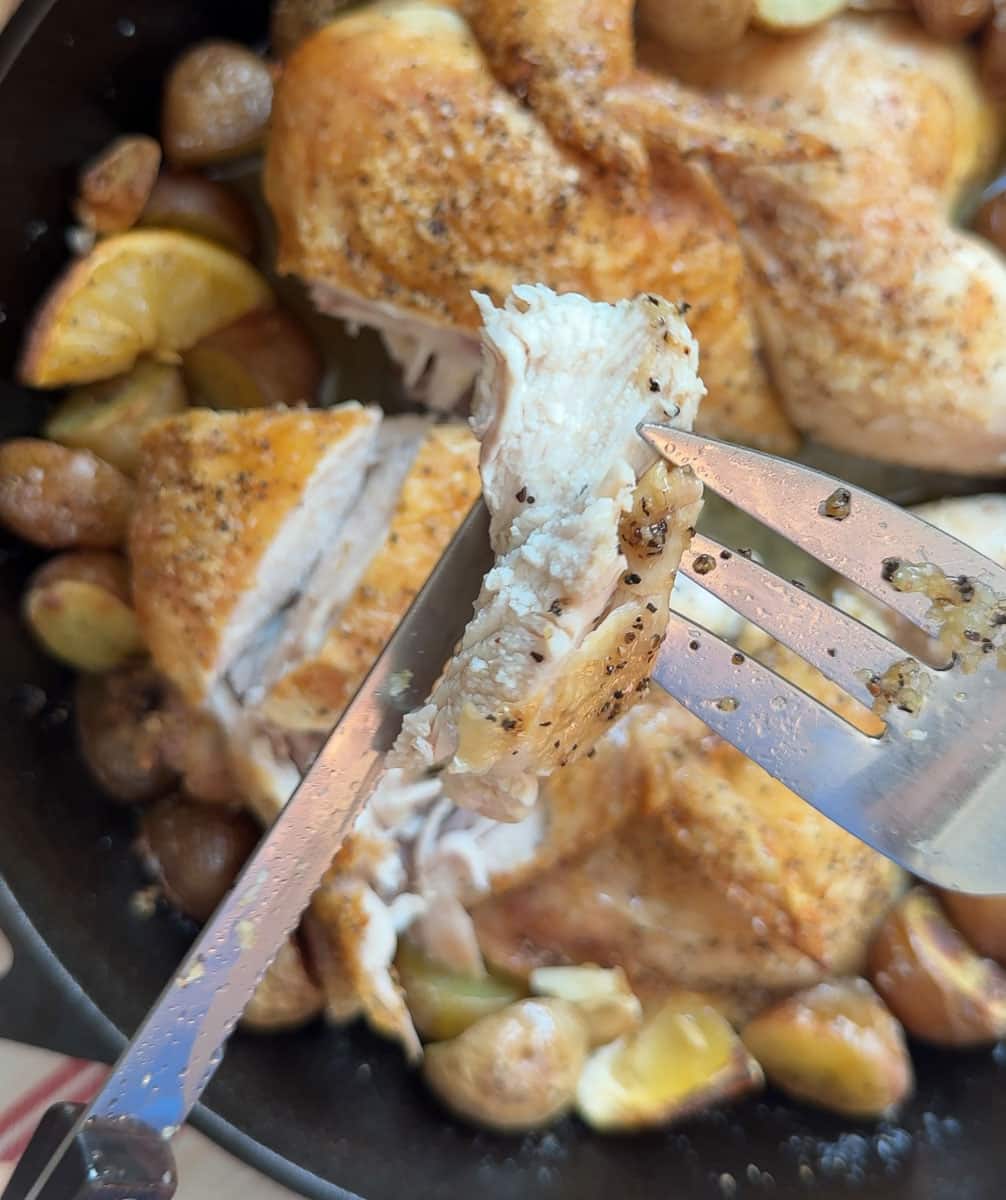
Once you learn how easy it is to spatchcock a chicken, you may never look at a whole roast chicken the same way again! Removing the backbone helps the whole chicken cooks evenly, gives you beautifully crispy skin and makes it possible to get tender, juicy chicken on the table without a complicated recipe. Whether you keep it simple with olive oil, salt and black pepper or add garlic cloves, lemon and fresh rosemary, this is one of those chicken recipes you can come back to again and again. Be sure to check the recipe card below for the complete ingredient list and instructions, and if you make it, I’d love for you to leave a star rating and let me know how your roast chicken turned out! Of course SAVE this post for later on your what’s for dinner Pinterest board!
From my table to yours with love, Sheila
Delicious Recipes Using Leftover Roast Chicken
Need a few NEW ideas for DINNER? Here are some of my favorite ways to use leftover roast chicken.
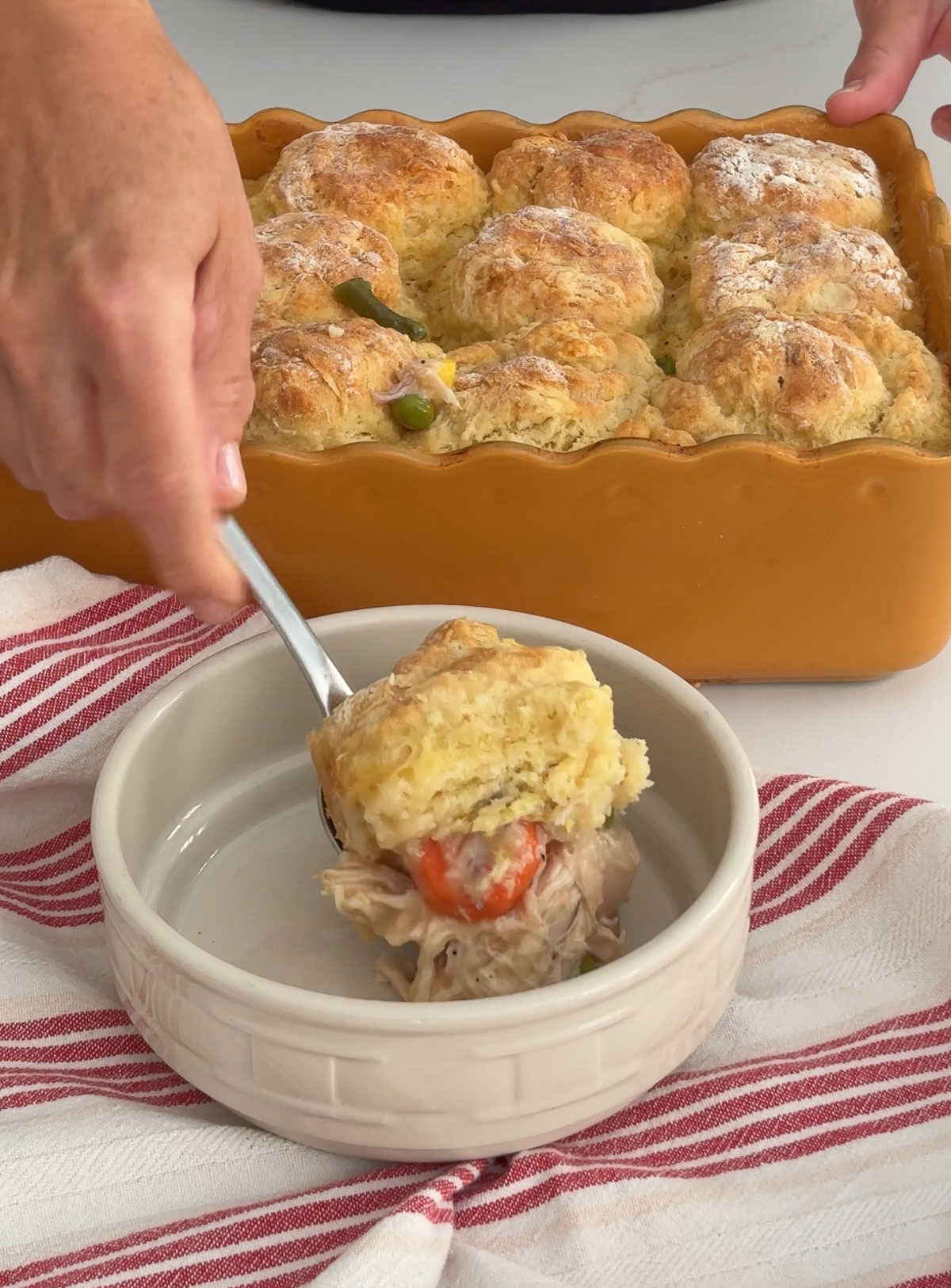
Chicken Pot Pie or Chicken and Biscuits
Quick & Easy Butterflied Roast Chicken Recipe (how-to)
Equipment
Ingredients
- 5 lb whole chicken
- 3 tbsp Olive Oil
- 1 tbsp kosher salt
- 1 tsp fresh cracked black pepper
Instructions
preheat oven to 400°
- Prepare the chicken. Place the chicken breast-side down on a sturdy cutting board with the neck end closest to you. Locate the backbone and place the palm of your hand firmly on the chicken just below the neck. Press down firmly until you hear a crack. This loosens the ribs from the spine and makes the backbone easier to remove.
- Remove the backbone. Using a very sharp knife or poultry shears, cut along one side of the backbone from the neck all the way to the tail. Repeat on the other side and remove the backbone. Save it for making chicken stock, if desired.
- Flatten the chicken. Turn the chicken skin-side up and press firmly on the breastbone with the palm of your hand until the chicken lies flat. Pat the chicken dry with paper towels.
- Season the chicken. Place the chicken skin-side up on a baking sheet or in a roasting pan. Drizzle with approximately 1 tablespoon olive oil and rub it over the skin. Season generously with your favorite seasoned salt, or use salt, black pepper and your favorite herbs and spices.
- Roast the chicken. Roast in a preheated 400°F oven for approximately 45 minutes, depending on the size of the chicken. Cooking time will vary, so don't rely on time alone.
- Check the temperature. Insert a meat thermometer into the thickest part of the thigh or breast, being careful not to touch the bone. The chicken is done when it reaches 165°F.
- Rest before serving. Remove the chicken from the oven and loosely tent with aluminum foil. Let it rest for 15 minutes before carving and serving. This allows the juices to redistribute, resulting in juicy, tender chicken.
Hi Sheila! Love this! I could not live without flat chicken on the grill in the summer! One of my favorite ways to cook chicken!
Side note: You would love making your own stock. I am a stock junkie! I make chicken, turkey, asparagus, even lobster stock. It has completely taken my soups to a new level. My advice…On a lazy Saturday or Sunday, take all those chicken spines and throw them in your crockpot with onion, garlic, carrot, bay leaves, whatever you have on hand. Let it go all day. Your house will smell LOVELY and you will have two to three containers of awesome stock. 🙂